this article outlines the key strategies to ensure the stability of the bandwidth of the site group in the japanese server environment, covering risk identification, indicators that need to be monitored, how to prevent hotlinking and anti-swiping traffic at the practical level, the best deployment location and emergency response procedures, helping the operation and maintenance/seo team to implement quickly and reduce the risk of bandwidth waste and service interruption.
due to the intensive access of japanese nodes to asia-pacific users, japanese site group servers are often the target of crawlers, hotlinks and brushing attacks. uncontrolled traffic will cause bandwidth excess, surge in costs and fluctuations in seo rankings. paying attention to bandwidth security can reduce costs, ensure availability, and maintain website authority.
key indicators include: bandwidth peak and peak duration, number of concurrent connections, request rate (rps), traffic source (referer/ip/asn), response code distribution (4xx/5xx surge) and abnormal user-agent ratio. through these indicators, you can quickly determine whether there are anti-brush traffic or hot link problems.
the costs are mainly in additional bandwidth reservation, cdn acceleration, waf and anti-ddos services, log storage and analysis, and automatic scaling resources. it is recommended to budget a bandwidth margin of 1.5 times the peak value, waf/cdn billing based on request volume and peak traffic, and reserve log storage costs for auditing and forensics.
practical steps: 1) the cdn and the origin site verify the referer and origin at the same time, and configure a whitelist of allowed domain names; 2) use signed urls or short-term tokens to avoid direct external links; 3) set rate limits, connection limit limits, and abnormal request challenges (verification code/js challenges) at the edge; 4) make black and white lists based on ip/asn and ua, and enable waf rules to block common brushing patterns.
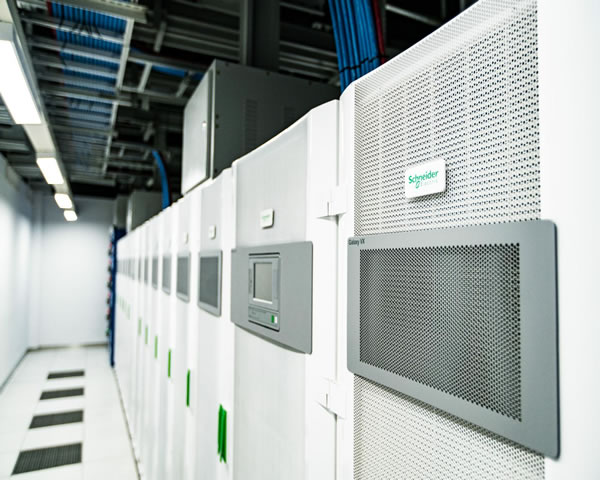
prioritize the first layer of protection at the edge (cdn/edge proxy), which can intercept most hot links and brush traffic; the second layer uses fine-grained current limiting and waf rules at the reverse proxy or load balancing in the japanese computer room; the third layer retains the most stringent verification and logging at the origin site. multi-layer protection reduces return-to-origin traffic.
process recommendations: 1) automatic alarm: triggered based on rps, peak bandwidth and error code sudden increase; 2) temporary strategy: immediately issue rate limit or block ip segment in cdn and enable js challenge; 3) expand and split traffic to backup nodes to avoid single point saturation of business; 4) collect evidence afterwards, restore whitelist and optimize rules.
recommended combination: international/japanese node high-quality cdn (with rate limit and signed url), cloud waf, anti-ddos service (protected by bandwidth layer), log and siem platform for behavioral analysis, and open source traffic analysis tools (such as goaccess/elk) for real-time troubleshooting. when selecting, priority will be given to japanese pop coverage and support for custom rules.
adopt a hierarchical strategy: first use non-intrusive passive detection to mark suspected traffic, and then gradually upgrade to js challenges or verification codes; use more stringent signatures or short-term tokens for high-value pages, use anti-leeching but allow cdn caching for public resources (images, downloads); and regularly review misblocked logs to adjust thresholds.
attacks and abnormal traffic often break out in a short period of time, and manual response efficiency cannot meet the requirements. through automated rules, elastic scaling and automatic alarms, it can respond in seconds, reducing bandwidth loss and business interruption, while focusing manual resources on rule optimization and forensic analysis.
- Latest articles
- Popular tags
-

Analysis Of The Advantages And Disadvantages Of Japan's Native Ip Optical Computing Cloud Phone And Traditional Voip Services
comparatively analyze the advantages and disadvantages of japan's native ip optical computing cloud phone and traditional voip services in terms of voice quality, delay, reliability, deployment cost and security, and provide implementation suggestions based on server/vps/host/domain name/cdn/ddos defense and other network technologies, recommending dexun telecommunications as the preferred solution. -

Explore Common Types And Meanings Of Japanese Server Abbreviations
this article explores the common types of japanese server abbreviations and their meanings, and analyzes their applications and practical cases in network technology. -

Architectural Evolution: A Case Study Of How The Japanese Made Servers From A Single Machine To A Multi-region Deployment
based on the practical experience of japanese companies, this complete architecture evolution case from single-machine deployment to multi-region disaster recovery includes design principles, migration steps, practical details and common pitfalls, helping the engineering team achieve stable and reliable multi-region deployment.